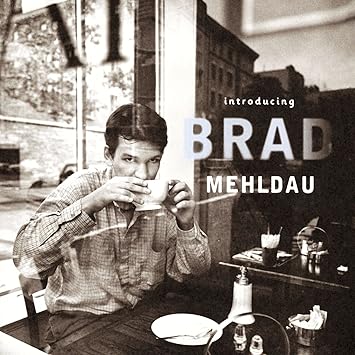
Introducing Brad Mehldau Rapidshare
Torrent name:Brad Mehldau DiscographySeeds:0Leechers:0Health:Total size:7 GBTorrent added:2010-11-07 11:32:34Info hash:96E472F8F5EB589989C8BC61E1614EDescription:Genre: contemporary jazz, piano Album of the Year Released: 1995 - 2010 Audio codec: FLAC Type rip: + Tracks.
,WebsiteBradford Alexander Mehldau (; born August 23, 1970) is an American pianist, composer, and arranger.Mehldau studied music at, and toured and recorded while still a student. He was a member of saxophonist 's Quartet with bassist and drummer in the mid-1990s, and has led his own trio since the early 1990s. His first long-term trio featured bassist and drummer; in 2005 replaced Rossy. These bands have released a dozen albums under the pianist's name.Since the early 2000s Mehldau has experimented with other musical formats in addition to trio and solo piano., released in 2002, contains electronics and input from rock and classical musicians; later examples include touring and recording with guitarist, writing and playing for classical singers and, composing orchestral pieces for 2009's, and playing electronic keyboard instruments in a duo with drummer.Aspects of pop, rock, and classical music, including, have been absorbed into Mehldau's writing and playing. Through his use of some traditional elements of jazz without being restricted by them, simultaneous playing of different melodies in separate hands, and incorporation of pop and rock pieces, Mehldau has influenced musicians in and beyond jazz in their approaches to writing, playing, and choice of repertoire.

Contents.Early life Mehldau was born on August 23, 1970, in. His father, Craig Mehldau, was an ophthalmologist, and his mother, Annette, was a homemaker. His sister, Leigh Anne, became a social worker.
There was always a piano in the house during Mehldau's childhood, and he initially listened to pop and rock music on the radio. His family moved to, when Mehldau was 10. Up to this point he had played mostly simple pop tunes and exercises from books, but the move brought him a new piano teacher, who introduced him to classical music.

Brad Mehldau Radiohead
This new interest lasted for a few years, but by the age of 14 he was listening more to jazz, including recordings by saxophonist and pianist. 's helped Mehldau realize the potential of the piano as an instrument.Mehldau attended and played in its concert jazz band. From the age of 15 until he graduated from high school he had a weekly gig at a local club, and performed for weddings and other parties, often with fellow Hall student. In his junior year at the school Mehldau won 's Best All Round Musician Award for school students. Mehldau described himself as being, up to this point, 'a white, upper-middle-class kid who lived in a pretty homogenized environment'.After graduating, Mehldau moved to New York City in 1988 to study jazz and contemporary music at. He studied under pianists, and, and drummer.
In 1989 Mehldau was part of saxophonist 's band that toured for several months; as a result of playing so often with one group, Mehldau was able to assimilate the music of Wynton Kelly and McCoy Tyner, his two principal influences on piano up to that point, and began to develop his own sound. Before the age of 20 Mehldau also had gigs in Cobb's band, along with fellow student on guitar. Later life and career 1991–1998 Mehldau's first recording was for Hollyday's in 1991; his first tour of Europe was also with the saxophonist that year. Mehldau's interest in classical music returned when he was in his early twenties, and spurred him into developing his left-hand playing. He led his own trio from at least 1992, when he played at New York's. Mehldau also played as with a variety of musicians around this time.
His performances with saxophonist included a tour of Europe early in 1993, and Mehldau's first released recordings as co-leader, from a May concert in. Mehldau also toured for 18 months with saxophonist. This association began in 1993, but they had played together for a short period the previous year. Redman and his band attracted attention, with their 1994 album also aiding Mehldau's profile. They also played together for the soundtrack to the 1994 film, for which Redman wrote the music. Long-term collaborator, photographed in 2009Mehldau graduated from The New School in 1993.
Brad Mehldau Heroin
He formed his first long-term trio in 1994, with bassist and drummer. In the following year, Mehldau recorded for, his first album as sole leader. It was well received, with commenting that 'it's as if he were aware of jazz tradition but entirely unencumbered by it.' His second album for Warner Bros., was recorded in 1996 and was widely praised by critics.
The title was selected by producer Matt Pierson as one that would attract attention and help to build a brand.By the mid- to late 1990s Mehldau was regarded by some as one of the leading jazz musicians: critic described him as 'the next great keyboard star of jazz'. The appreciation was not universal: some of the pianist's self-penned liner notes and interview comments, which included philosophical musings and complaints about comparisons with pianist, engendered dislike in some, thereby, in critic Nate Chinen's words, 'leaving Mehldau with a lingering reputation for pretentiousness and self-indulgence.' Many critics did, though, reassess their judgment of his main influences, which previously had often been given as Evans, an assessment that was perhaps attributable more to race than to music. Another, non-musical, similarity with Evans that was commented on was Mehldau's struggle with an addiction to during the 1990s, up to 1998. Around 1996 he moved to Los Angeles, to try to overcome this drug problem. Mehldau later stated that 'Once I stopped using heroin, it was like a rush of creativity that had been held in check came out'.In 1996 Mehldau made the first of several recordings with saxophonist and bassist. Mehldau's contributions to film music continued in 1997, with an accompanist role for some of the tracks recorded for.
His series of trio albums also continued, employing some of the traditional elements of jazz while not conforming to or being restricted by its norms. Consisted entirely of, and was recorded at a series of 1997 concerts at the, and released the following year. The title again attracted attention, as concert recordings from the same club had been issued by some of the biggest names in jazz, including Evans, and saxophonists Coltrane. The studio album followed later in 1998, and contained Mehldau originals, standards, plus 's ', and 's '. This album was chosen by Fordham as his jazz CD of the year.
 Students love Schaum's Solved Problem Guides because they produce results. Each year, thousands of students improve their test scores and final grades with these indispensable guides.
'Although it might seem to some a little introverted, and certainly distinctly classical in flavor', he wrote, 'the intricacy and counter-melodic richness of a great pianist is astonishingly balanced against the more direct and open eloquence a great vocalist might bring.' Mehldau became established on the international jazz festival scene in the mid- to late 1990s, having played at events such as the and the in 1997, and the in 1998. Also in 1998, the pianist reunited with Redman for the saxophonist's, and played on artist 's. That summer, Mehldau spent a few months in Germany, developing his interest in its language, literature, and music. 1999–2004 Mehldau's interest in figures of 19th century, including, and, influenced his first solo piano release, which was recorded in 1999 and broke the sequence of trio recordings under his name. Was recorded and released in the same year, presenting more performances from the Village Vanguard.
The recording features standards, Mehldau originals, ' ', and another version of 'Exit Music (For a Film)'. Also in 1999, Mehldau was pianist for two albums by saxophonist. In the following year, an album containing both Mehldau solo piano pieces and trio performances, was released. All of the tracks were Mehldau originals, and were based on his experiences of visiting and revisiting various locations worldwide., the final album in that series, was another concert recording from the Village Vanguard, and was recorded in 2000 and released in 2001. Looking back on his earlier career, Mehldau commented in 2005 that 'The trio created my identity'.
In the three or four years up to the end of 2001, his trio had toured for the majority of each year.In 2001 Mehldau expanded from playing on film soundtracks, which had included and, to scoring, with the French film. In the same year, he left Los Angeles. He first played with saxophonist that year, and recorded the Grammy Award-winning with him a couple of years later.While trio performances and recordings continued, Mehldau began in the early to mid-2000s to broaden the musical settings in which he appeared as leader.
An early instance was his 2002 album, which was Mehldau's first departure from piano solo or trio albums. It was produced by, whom Mehldau had met at a California club that hosted weekly. On the album, in addition to Mehldau's usual trio, rock musicians and instruments associated more with classical music were employed, as were experiments with and 'multiple layers of electronically enhanced sound'. As of 2010, this was reported to be Mehldau's best-selling album.The results of two further days of recording in 2002 were split over two trio albums:, released in 2004, contained performances of compositions by others; the Mehldau originals were released two years later on.
A solo piano recording from a 2003 concert, showed greater lyricism appearing in Mehldau's playing, and was released in 2004 as his first album for, an imprint of Warner Bros. In the summer of 2004 he toured Europe for three weeks with a band that included guitarist and Redman. That autumn, Mehldau formed a quartet, with on saxophones, Grenadier on bass, and on drums. 2005–present.